[pc-pvt-content allow=”36,6,32,33″]
I. OBJECTIVE
1. To be able to have an Intensive Quality Control Monitoring in order to produce quality product for our consumer
II. DEFINITION OF TERMS
1. MDM – Mechanical deboned chicken/meat
III. GENERAL POLICIES
Here are the standard measures for Quality Control:
1. DIMSUM
A. Mixing (MDM, Fats and Meat)
• Use the band saw to portion the meat into cube for grinding, to reach the standard of a frozen meat while processing.
• Randomly sense the odor and color of grinded meat during processing.
• Get a sample from every batch to product test.
• Log the time of checking of raw materials if it’s complete. (Correct Sequence, Code, Time Started, Time End, Machine Used, Area, Target Quantity and Actual Yields)
• Fill up the forms for Siomai Preparation Monitoring Report.
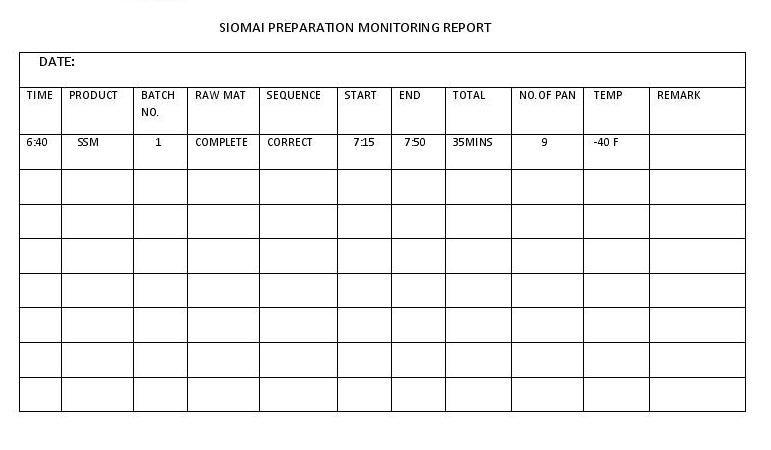
B. Mixing of Filling (SSM, SSF, SM, SF, PD)
• Arrange the 8-pan per batch. It should be properly labeled with date of production and batch no.
• Check and record the temperature of each pan. It should be below 40˚C.
• Check for Organaleptic properties of each pan especially for taste, smell and texture.
• Get sample per batch for each product for sensory and ph analysis.
• Standard refilling of meat mixture in the machine should be per batch.

• Check the weight (per piece) of all dimsum products. It should be according to the Set Standard Weight.
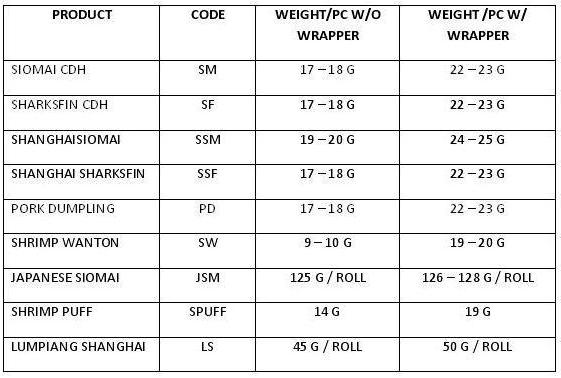
C. Wrapping
• Check the sequence of mixing per batch.
• Check the thickness and consistency of the wrapper per batch (marked with date and batch number).
• Check the taste of the wrapper by steaming.
D. Steaming (SSM, SSF, PD, SF, SM, JSM, SW)
• Preheat the steamer for 10-15 minutes before starting to steam the raw products.
• Organoleptic Test must be done for all products that pass through the steamer.
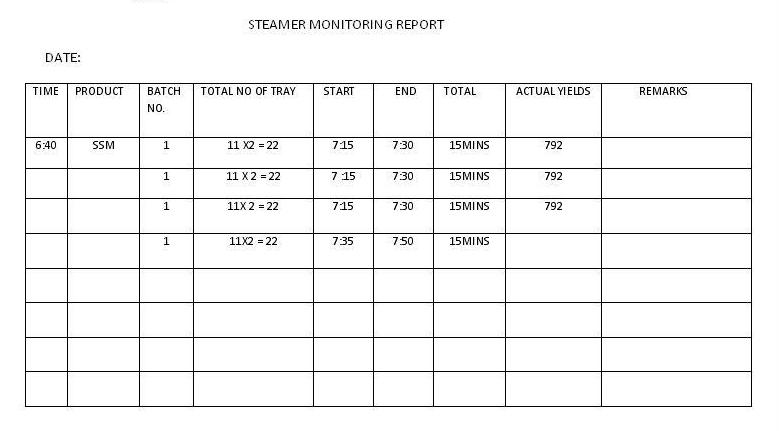
• Time of steaming must be monitored. Set the timer for 15 minutes for steaming of siomai.
• Get the temperature of the steamer if possible.
• After steaming, cool down the siomai by air cooling and with the aid of blower.
• After 5-10mins., remove the products from the steamer pan and transfer it to another pan (11 standard steamer pans to 1 pan) and place it in the cooling room for further cooling.
• Label per batch.
E. Packing (SSM, SSF, SF, SM, JSM, PD, LS, SW)
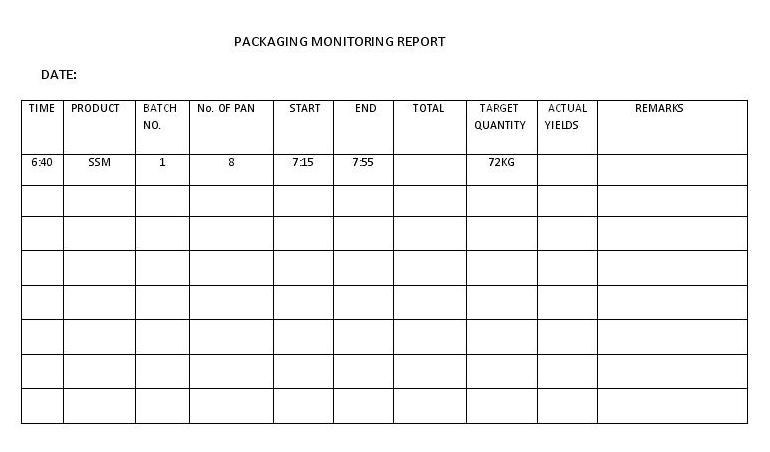
• Dimsum finished products should be totally cooled down before packing. Proper cooling of the product should be below 28˚ C before packing.
• Clean the tables and the area before packing.
• Pack the siomai in vacuum plastic (200mm x 340mm).
• Pack the product per batch.
• Standard for packing:
SSM – 40pcs/pack SM – 48pcs/pack SW – 40pcs/pack
SSF – 32pcs/ pack JSM – 40pcs/pack LS – 42pcs/pack
SF – 32pcs/pack PD – 28pcs/pack Sago – 375g
F. Vacuum-sealing
• Before or in-between the vacuum-sealing of all dimsum products, cut a copy of the label (Expiry Date) from the plastic pouch and attach it to the Production Logbook for monitoring and record purposes.
• QA must check that all the products are properly vacuum-sealed.
G. Metal Detector
• All finished products must pass through the metal detector.
• Make sure that the products are properly vacuum-sealed before passing through the metal detector.
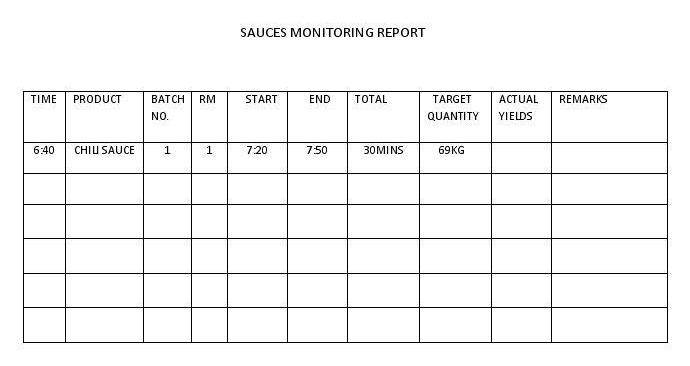
2. SAUCES
• Check the taste, color and weight per batch.
• Check the temperature of the sauce before filling it into plastic pouches. Standard temperature should be at 35-40˚ C.
• After filling and sealing, a leak test must be done by applying a hard press on the pouch. It should be done in all packed sauces.
• After packing, it should be placed in cold water (15-20˚ C) in order to shock any microorganism present into the sauce during filling. Let it stay for about 30 minutes with maintained water temperature.
• Pouches must be properly labeled with the following information: Product Name, Production Date and Expiry Date.
• Pass through the Metal Detector before storing.
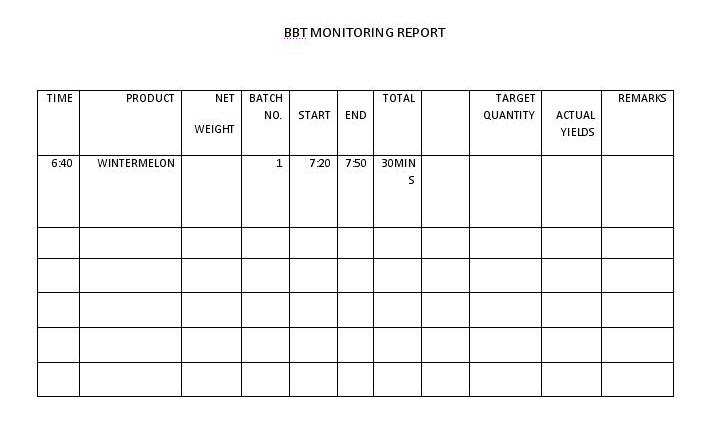
3. BBT PRODUCTS
• Check the sequence in mixing of BBT Product.
• Check the raw materials including manufacturing dates, expiry dates and Organaleptic properties.
• Check the standard 100% net weight and seal integrity. Check the products if in good condition.
• Check the name, lot no., and expiration date.
A. Brown and White Syrup
• All ingredients should be boiled to dissolve all solids.
• Cool down the solution to 4˚C before packing.
• Print the expiration date and production date into the plastic while waiting for the solution to cool down.
• After packing, seal it properly and apply the leak test.
• Place the packed syrup into a cold water bath with temperature of 20-30˚C.
• Place the finished product into clean, close crates.
• Store it away from direct heat or extreme sunlight
B. Mango Delight, Strawberry Passion, Strawberry, Brown Sugar
• Pack all syrup according to the required weight into individual plastic pouches.
• Arrange the pouches accordingly.
• Put enough water in the industrial cooker to submerge the pouches.
• Apply heat to simmer the water but not boiling.
• Let it stay for about 30 minutes before removing it from the industrial cooker.
• Place the pouches into cold water with temperature of about 15-20˚C until the syrup cools down.
• Remove it from the water bath and place it into clean and dry open crates.
• Wipe off excess water and do the leak test procedure.
• Make sure the pouches are dry before putting the label.
• Pack it according to the standard whole pack size.
• Place whole packed syrups into clean close crates and keep it in an ambient area away from direct sunlight and high temperature.
C. Syrup and Sauces
• It should be free from leaks by doing the leak test.
• Make sure that the packaging is clean and not sticky.
• Labels must have the correct product name and expiration date.
4. PILING OF CRATES WITH FINISHED PRODUCTS
• The bottom crate must be empty to prevent direct contact of finished product to the floor.
• Standard quantity of products inside a crate must be 30 packs for SSM and 40 packs for SSF.
• The crates with products must be immediately placed into the walk-in freezer after passing the metal detector.
IV. PROCEDURE FLOWCHART
Flowchart Title
(Not Applicable)
V. REFERENCE/INTERFACE PROCESS
Document Title
1. Process Flow
VI. FORMS AND RECORDS
Form Title
1. Wrapping Section Form
2. Monitoring of Mixing Fillings Form
3. Monitoring of SSM/CDH Wrapper Form
[/pc-pvt-content]
